One of the smallest countries in Africa, The Gambia was once part of the Mali and Kaabu Empires. The first written accounts of the region come from records of Arab traders in the 9th century. Arab traders established the trans-Saharan trade route for slaves, gold, and ivory. In the 15th century, the Portuguese took over this trade using maritime routes, until they sold exclusive trade rights on The Gambia River to English merchants. An 1889 agreement with France established the present boundaries, and The Gambia became a British Crown Colony.
As many as 3 million slaves may have been taken from the region during the 3 centuries that the transatlantic slave trade operated. Many of those taken were sold to Europeans by other Africans; some were prisoners of intertribal wars; some were sold because of unpaid debts, while others were kidnapped. Slaves were initially sent to Europe to work as servants until the market for labor expanded in the West Indies and North America in the 18th century.
The Gambia achieved independence in 1965, as a constitutional monarchy within the British Commonwealth then became a republic following a referendum 5 years later. Their first President, Jawara, who was re-elected five times ensured a relative stability. But in July 1994, the Army seized power, deposing the government of Jawara. Lieutenant Yahya Jammeh run an authoritarian regime until 2017, which marked a turning point towards democratic governance. Economically, efforts have been made to diversify industries beyond tourism and agriculture.
For visitors, the main attraction is its beautiful beaches along the Atlantic Ocean, rich wildlife in national parks like Kiang West and Abuko Nature Reserve, and vibrant culture seen in its colorful festivals such as the Banjul Demba Cultural Festival, the Kankurang Festival (honors the Kankurang, a masked figure from Mandinka tradition) and Junkanoo Festival.
Banjul / Serekunda
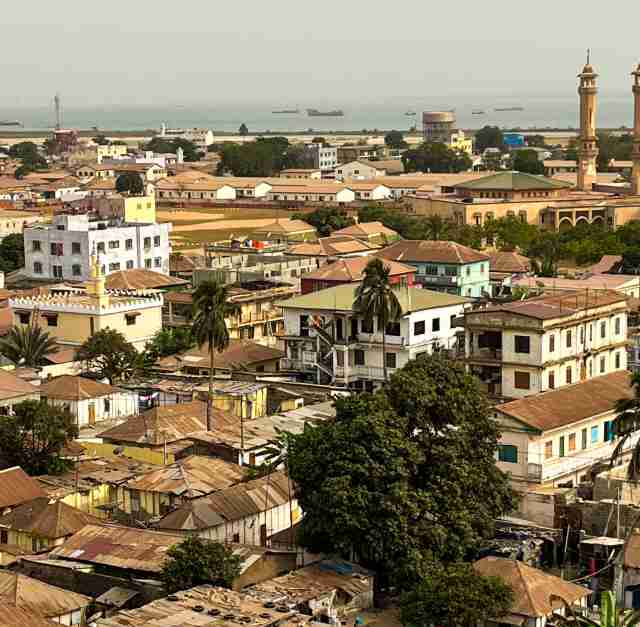
Most of the excitement and economic activity in Gambia takes place in the coastal region, around the tourist resorts, the capital city of Banjul and the bustling commercial port of Serekunda. Banjul is actually one of the smallest capital cities in Africa, covering an area of just 12 square kilometers. It is situated on St Mary's Island, surrounded by the Gambia River, making it one of the few capital cities located on an island. It has an interesting ethnographic museum, a few administrative buildings and monuments, decadent wood-panelled buildings and colonial dwellings that clash with its chaotic commercial port and the colourful Albert Market, overflowing with all kinds of merchandise.
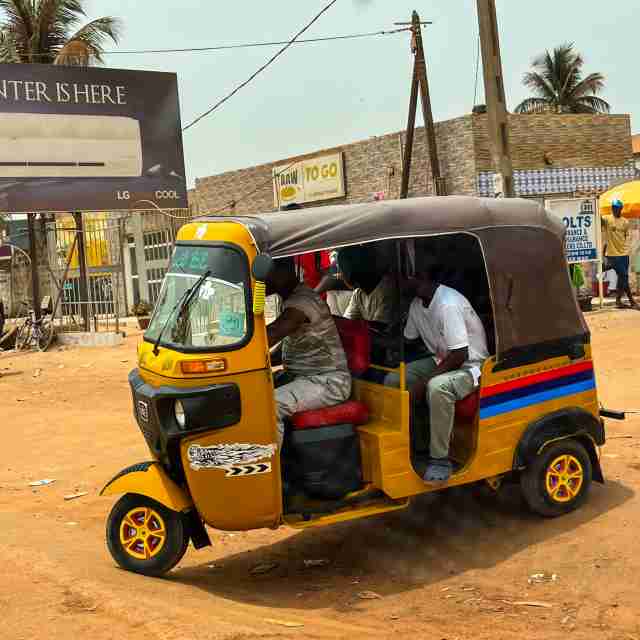
But the real commercial hub of the country is the city of Serekunda, which constitutes the continuity of its much more populated and chaotic hinterland, as well as the gateway to a coastal region where glittering accommodation facilities and palm-fringed beaches alternate with villages and harbours that have retained their traditional atmosphere, and green areas, lagoons, forests and unspoilt nature reserves. Not far from the hustle & bustle and collective taxi traffic of Serekunda is the Kachikaly Crocodile Pool, a sanctuary for a family of 80 sacred crocodiles.